
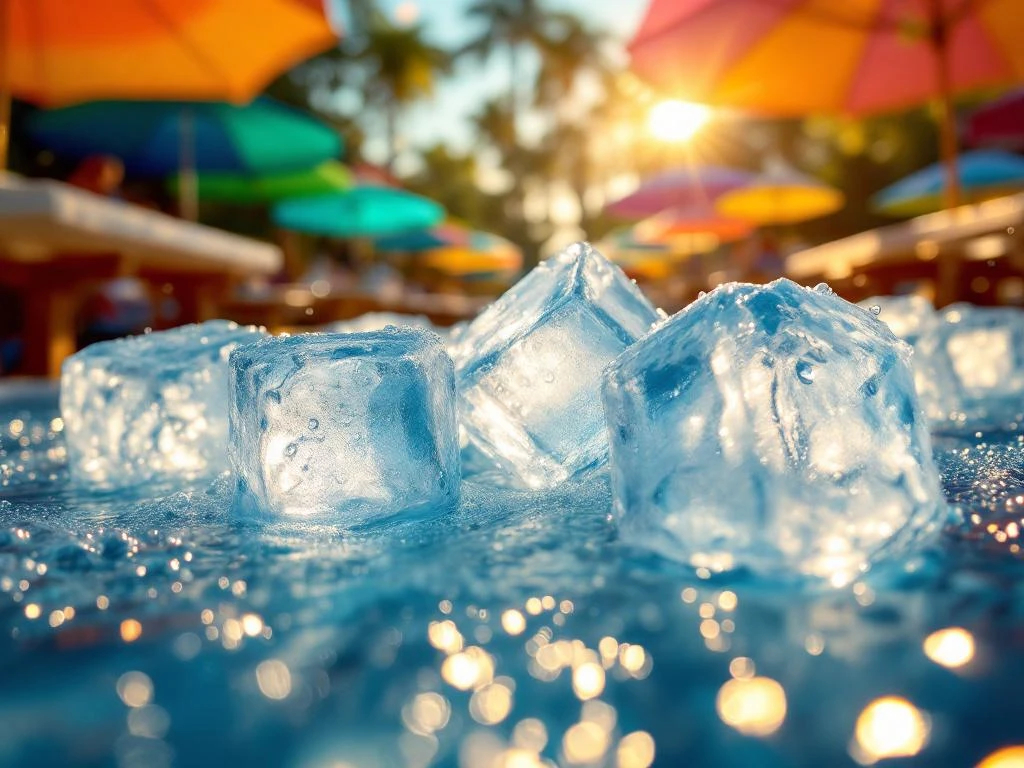
Ice duration at outdoor events depends on several factors, including temperature, humidity, container type, and ice size. In moderate conditions (20–25°C), ice in a well-insulated cooler typically lasts 6–12 hours, while ice in open containers may only last 1–3 hours. Proper insulation, shading, and pre-chilling techniques can significantly extend ice life at summer events.
What factors affect how quickly ice melts at outdoor events?
Temperature, humidity, sun exposure, container type, and ice size are the primary factors that determine how quickly ice melts outdoors. Air temperature has the most significant impact, with ice melting exponentially faster as temperatures rise above 20°C.
Humidity plays a surprisingly important role in ice melting time at outdoor parties. High humidity prevents evaporation, which normally provides cooling through heat absorption. When humidity exceeds 70%, ice melts roughly 20–30% faster than in dry conditions because the surrounding air retains more heat.
Direct sunlight accelerates melting dramatically compared to shaded areas. UV radiation and radiant heat can increase surface temperatures by 10–15°C above ambient air temperature. This means ice in direct sunlight melts three to four times faster than ice kept in the shade.
Container material and insulation quality significantly impact how long ice lasts outside. Styrofoam coolers provide basic insulation, while high-quality rotomoulded coolers with thick walls can extend ice life by 200–300%. Metal containers conduct heat rapidly and should be avoided for outdoor event ice management.
Ice size and surface area determine melting speed through the surface-to-volume ratio. Smaller ice cubes have more surface area relative to their volume, causing them to melt faster. Large blocks of ice maintain their temperature longer because less surface area is exposed to warm air.
Wind affects ice longevity in complex ways. Light breezes help by promoting evaporation around ice containers, which creates cooling. However, strong winds can increase heat transfer and actually accelerate melting, particularly when the air temperature exceeds the ice temperature.
How long does ice typically last in different outdoor conditions?
Ice duration varies dramatically based on outdoor conditions and storage methods. In mild temperatures (15–20°C), ice in quality coolers lasts 12–24 hours, while the same ice in basic containers may only survive 3–6 hours. Extreme heat above 30°C can reduce these times by half.
For summer event ice planning, understanding realistic timeframes helps with preparation. In moderate conditions around 25°C, a well-packed cooler maintains ice for 8–12 hours. The same conditions reduce ice bucket life to just 2–4 hours, while open containers may see complete melting within 1–2 hours.
High-quality insulated coolers perform remarkably well even in challenging conditions. Premium models can maintain ice for 24–48 hours in temperatures up to 25°C when properly pre-chilled and packed. These coolers use thick insulation and tight seals to minimise heat transfer.
Hot weather above 30°C significantly reduces ice duration at outdoor events. Even the best coolers struggle to maintain ice beyond 12–18 hours in extreme heat. Basic coolers and ice buckets become impractical, with ice lasting only 1–3 hours in direct sunlight.
Humidity compounds temperature effects on melting rates. In tropical conditions with high heat and humidity, ice melts 25–40% faster than in dry heat. This combination prevents evaporative cooling and maintains higher ambient temperatures around ice containers.
Overnight temperature drops can extend ice life significantly. Ice that survives the hottest part of the day often lasts much longer as evening temperatures fall. This natural cooling effect can add 6–12 hours to ice duration in outdoor settings.
What are the best ways to keep ice from melting too quickly outdoors?
Pre-chilling containers, using proper insulation, strategic placement, and layering techniques can double or triple ice life at outdoor events. The most effective approach combines multiple strategies rather than relying on a single method.
Pre-chilling your cooler or ice bucket for several hours before adding ice makes a substantial difference. Place the empty container in a cool location or add sacrificial ice that you’ll discard before the event. This prevents the container walls from absorbing heat energy that would otherwise melt your event ice.
Insulation upgrades provide excellent returns on investment for keeping ice frozen outdoors. Wrap coolers in reflective emergency blankets or towels to reduce heat absorption. For ice buckets, nestle them inside larger containers with insulating material like towels or newspaper filling the gap.
Strategic placement away from direct sunlight and heat sources extends ice life dramatically. Position ice containers on the north side of buildings or under umbrellas and gazebos. Avoid placing them near grills, heaters, or on hot surfaces like concrete or tarmac.
Proper packing techniques maximise ice efficiency. Fill containers completely to minimise air space, as air heats up faster than ice. Layer ice with the items you’re cooling, and add a top layer of ice for maximum cooling effect. Keep containers closed except when accessing contents.
Adding salt to ice lowers its melting point but also makes it melt faster initially. This technique works well for maintaining very cold temperatures for specific items but isn’t ideal for extending overall ice duration. Use salt selectively for items requiring the coldest possible temperatures.
Multiple smaller containers often work better than one large container for outdoor catering ice solutions. This approach allows you to keep backup ice sealed while accessing primary containers, and smaller volumes are easier to keep properly insulated.
Which alternatives work better than regular ice for outdoor events?
Frozen water bottles, gel packs, and dry ice each offer specific advantages over regular ice for outdoor events. The best choice depends on your cooling needs, budget, and safety considerations. Many event organisers combine multiple cooling methods for optimal results.
Frozen water bottles provide excellent cooling while serving dual purposes. They last longer than ice cubes because of their lower surface-to-volume ratio and provide drinking water as they melt. Large 2-litre bottles stay frozen for 8–12 hours in moderate conditions and won’t create the mess of melted ice water.
Reusable gel packs maintain consistent temperatures longer than regular ice because they’re designed to absorb and release heat slowly. Quality gel packs can stay cold for 12–24 hours and won’t create water as they warm up. They’re particularly useful for keeping food at safe temperatures during extended outdoor events.
Dry ice provides superior cooling power, staying at -78°C compared to regular ice at 0°C. A small amount of dry ice can keep items frozen for 24–48 hours. However, it requires careful handling with insulated gloves and proper ventilation, making it suitable only for experienced users who understand safety protocols.
Insulated cooling towels and evaporative cooling products work well for personal cooling but aren’t suitable for food and drinks. These alternatives use water evaporation to create cooling effects and can provide hours of relief in hot conditions.
Phase change materials (PCMs) represent advanced cooling technology that maintains specific temperatures for extended periods. While more expensive than traditional ice, PCMs can maintain precise temperatures for 6–12 hours and are reusable, making them cost-effective for frequent outdoor events.
Combination approaches often work best for large outdoor gatherings. Use dry ice or gel packs for items requiring the coldest temperatures, frozen water bottles for drinks, and regular ice for general cooling needs. This strategy maximises cooling efficiency while managing costs and safety considerations.
Understanding ice duration at outdoor events helps you plan better gatherings and avoid the disappointment of warm drinks and unsafe food temperatures. The key lies in combining proper container selection, strategic placement, and appropriate ice alternatives based on your specific needs. At 24 ICE, we understand the importance of keeping things perfectly chilled for outdoor celebrations, which is why our frozen cocktails are designed to deliver consistent refreshment without the hassle of managing traditional ice throughout your event.