
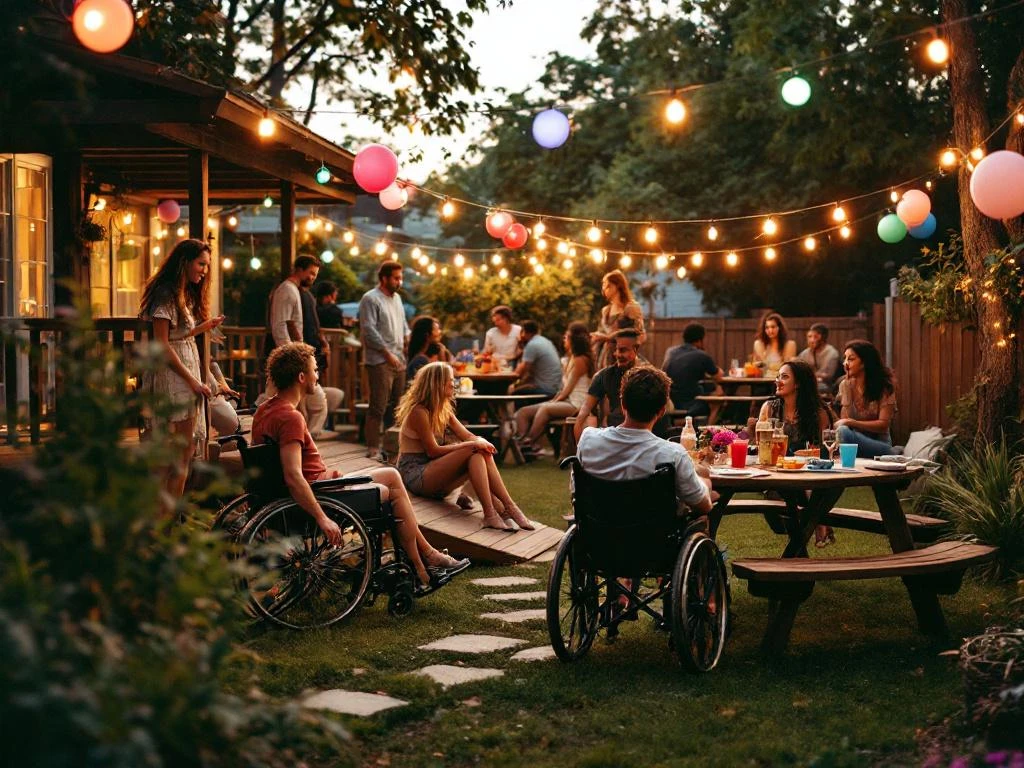
Planning parties with accessibility in mind means creating inclusive events where everyone can participate comfortably, regardless of their physical abilities, sensory needs, or other requirements. Accessible party planning involves thoughtful venue selection, clear communication, and proactive accommodations. When done well, inclusive events benefit all guests by creating more welcoming, comfortable environments that encourage genuine participation and connection.
What does it mean to plan an accessible party?
Accessible party planning means designing inclusive events that accommodate guests with various disabilities, mobility needs, sensory sensitivities, and other accessibility requirements. It involves removing barriers that might prevent someone from fully participating in your celebration.
This approach goes beyond basic wheelchair accessibility. Inclusive celebration planning considers visual and hearing impairments, cognitive differences, chronic illnesses, and temporary limitations like injuries. The goal is to ensure every guest feels welcome and can engage meaningfully in your event.
Successful disability-friendly parties require advance planning and open communication. You’ll need to gather information about your guests’ needs, research venue accessibility, and prepare appropriate accommodations. This proactive approach prevents last-minute scrambling and demonstrates genuine care for your guests’ comfort and participation.
How do you choose a venue that works for everyone?
Accessible venue selection requires evaluating multiple factors, including wheelchair accessibility, parking options, restroom facilities, lighting conditions, noise levels, and transportation access. The venue should accommodate all guests comfortably without creating barriers to participation.
Start by assessing physical accessibility features. Look for step-free entrances, wide doorways (at least 32 inches), accessible parking spaces near the entrance, and properly equipped restrooms. Check that pathways are clear and well lit, with stable surfaces that accommodate mobility aids.
Consider sensory factors that affect comfort levels. Venues with adjustable lighting, manageable noise levels, and quiet spaces for breaks work better for guests with sensory sensitivities. Accessible party planning also means ensuring access to public transportation or providing clear directions for various transportation needs.
Visit potential venues in person to test accessibility features. Many venues claim accessibility but have subtle barriers like heavy doors, poor lighting, or limited accessible seating areas that only become apparent during site visits.
What accommodations should you consider for different types of disabilities?
Different disabilities require specific accommodations, including mobility support, visual and hearing assistance, cognitive considerations, sensory accommodations, and dietary modifications. Understanding these varied needs helps you create truly inclusive events that work for everyone.
For mobility accommodations, ensure wheelchair-accessible spaces, reserved accessible parking, and seating options that don’t isolate guests using mobility aids. Provide clear pathways and consider the height of food service areas, bars, and activity stations.
Visual and hearing impairments need different support approaches. Offer large-print materials, good lighting for lip reading, and consider assistive listening devices for events with speeches or music. Party accessibility tips include describing visual elements aloud and providing written summaries of verbal announcements.
Cognitive and sensory considerations involve creating predictable environments with clear signage, quiet spaces for breaks, and advance information about event schedules. Some guests benefit from detailed venue layouts or the option to arrive early for familiarization.
How do you communicate accessibility information to your guests?
Effective accessibility communication involves gathering guests’ needs through inclusive invitation language, providing detailed venue information, and creating comfortable ways for people to request accommodations. Clear, proactive communication prevents accessibility barriers and demonstrates genuine inclusivity.
Include accessibility questions in your invitations using welcoming, non-intrusive language. Ask about mobility needs, dietary requirements, sensory considerations, and communication preferences. Frame these questions positively, emphasizing your commitment to ensuring everyone’s comfort.
Provide comprehensive venue and event details in your communications. Include information about parking, entrance locations, restroom facilities, seating arrangements, and planned activities. Inclusive events benefit from detailed accessibility maps or descriptions that help guests prepare appropriately.
Create multiple communication channels for accessibility requests. Some guests prefer email, others phone calls, and some may need alternative formats. Respond promptly to accommodation requests and follow up to confirm arrangements are working effectively.
What are the most important accessibility features to include in party planning?
Essential accessibility features include physical access provisions, multiple communication methods, inclusive food and beverage options, flexible seating arrangements, accessible entertainment choices, and clear emergency procedures. These elements create the foundation for successful inclusive events.
Physical accessibility forms the baseline for inclusive parties. Ensure step-free access, adequate space for mobility aids, accessible restrooms, and appropriate lighting throughout the venue. Consider the accessibility of all party areas, including outdoor spaces, dance floors, and food service areas.
Communication accessibility involves providing information in multiple formats and ensuring announcements reach all guests. Use visual and verbal communication methods, provide written materials when appropriate, and consider assistive technologies for guests who need them.
Food and beverage considerations extend beyond basic dietary restrictions to include accessible serving heights, clear ingredient labeling, and options for various eating difficulties. Accessible party checklist items should include flexible seating that accommodates different needs without segregating guests.
Entertainment and emergency planning complete your accessibility framework. Choose activities that offer multiple levels of participation and ensure emergency procedures account for guests with various disabilities. Clear evacuation routes and communication methods help everyone stay safe and comfortable throughout your event.
How 24 ICE helps with accessible party planning
24 ICE specializes in creating fully inclusive events that accommodate all guests’ accessibility needs without compromising on style or celebration quality. Our comprehensive approach ensures your party is both memorable and accessible through:
• Expert venue assessment and selection with detailed accessibility evaluations
• Professional coordination with accessibility equipment providers and specialized services
• Custom accommodation planning tailored to your specific guest requirements
• Inclusive menu design that addresses dietary restrictions and serving accessibility
• Clear communication strategies that reach all guests effectively
• On-site accessibility support throughout your event
Ready to create an unforgettable, inclusive celebration that welcomes everyone? Contact 24 ICE today to discuss your accessible party planning needs and discover how we can make your vision a reality for all your guests.